I spent the summer in the maintenance organisation of Kia's Žilina plant, rotating through its five departments (Press, Body, Paint, Assembly and Engine). My main project was the design of an automated robotic wheel-rim loading cell that removes three manual handling positions from the line.
The role
Kia's Žilina plant is Hyundai Motor Group's car factory in Slovakia. I worked in its maintenance organisation, which keeps the automation running in every production department, and rotated through all five of them. For the wheel-loading project I reported to the Head of Group and the Assembly Manager.
Rotating through every department gave me the whole sequence of how a car gets built:
- Press shop: raw coils stamped into body panels by precision dies.
- Body shop: 400+ robots weld the stamped panels into a chassis.
- Paint shop: chemical baths, then robotic sealing and paint.
- Assembly: final assembly with documented quality control at each station.
- Quality systems: every tool torque is logged centrally with operator tracking for compliance.
I also observed the EV battery station: automated intake from supplier trucks, autonomous transport to the line, battery-to-vehicle alignment and an automated installation with verification.
Main project
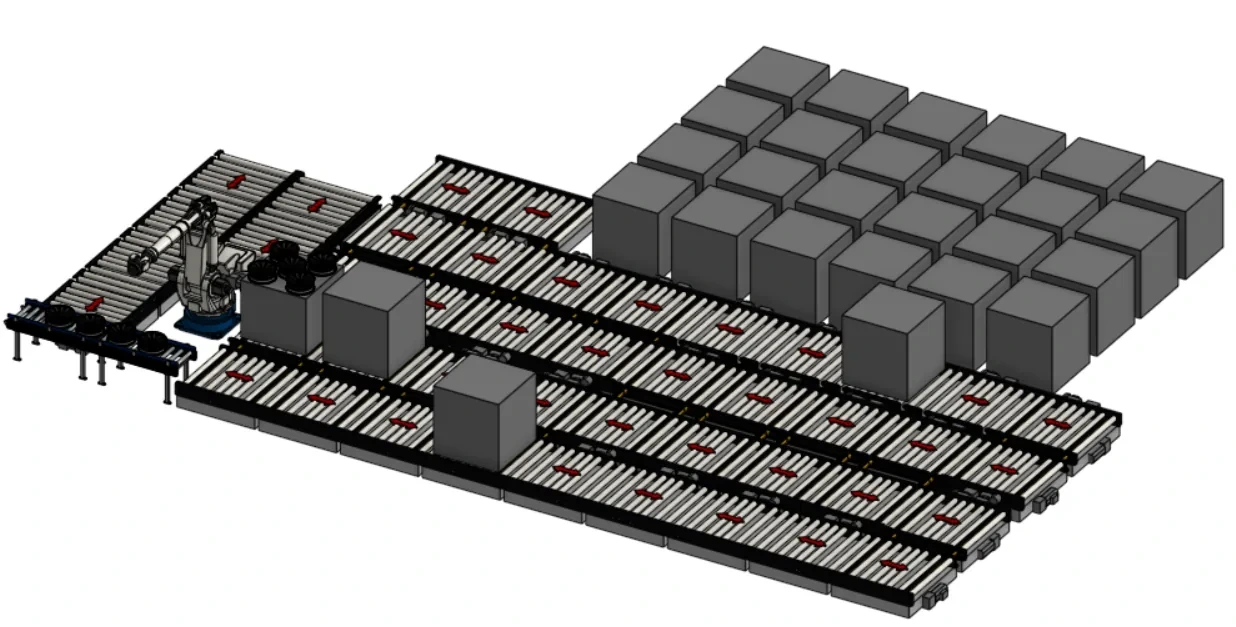
I led the design of a robotic wheel-rim loading system, reporting to the Head of Group and the Assembly Manager. The cell removes three manual handling positions from the line and replaces them with one oversight station.
System design
- Robotic manipulation: Hyundai robotic arm with a Festo pneumatic gripper that grabs rim interiors, plus a suction-cup jig that strips the plastic layers between pallet stacks.
- Bi-directional conveyors: a conveyor network that lines up rim pallets in production order.
- Material handling: pallets are loaded and sequenced for the line without an operator.
- Oversight station: one operator booth for monitoring, reducing staffing in the area from three people to one.
Redundancy and failsafes
- Conveyor failure: pallet paths re-route automatically around a failed conveyor.
- Robotic arm backup: a second arm can take over if the primary goes down.
- Final failsafe: manual rim loading remains possible for emergencies.
Other work
Each department rotation came with its own maintenance and automation work.
Assembly
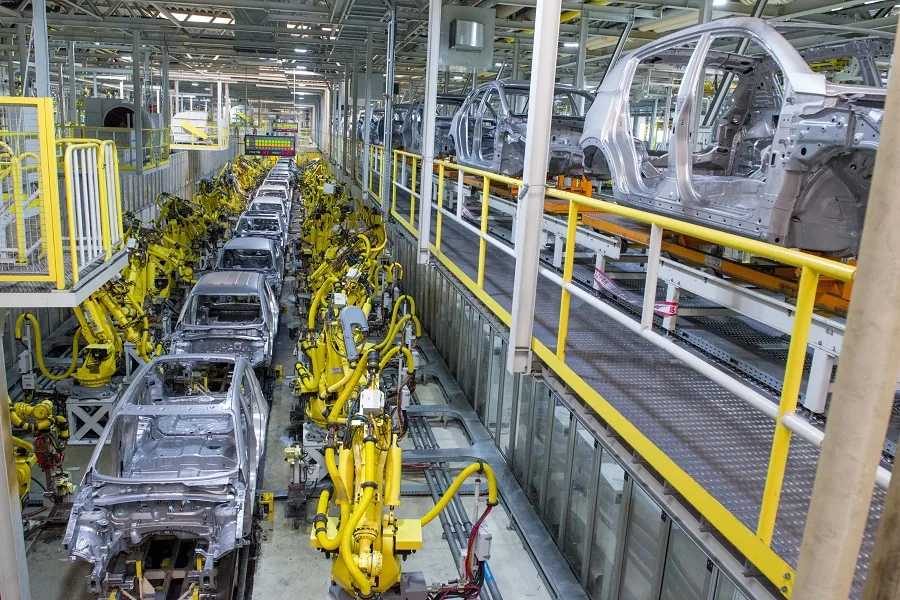
I worked on the main assembly line's automation, including the magnetic rail system that lifts vehicle undersides to the chassis, and supported a new model launch.
- Repaired and maintained EMS door carriers, replacing outdated hardware.
- Troubleshot the proprietary magnetic-induction robotic rail system.
- Performed PLC programming and tool-head tuning to resolve machine faults.
- Resolved machine interference issues during production ramp-up of the new model.
Engine
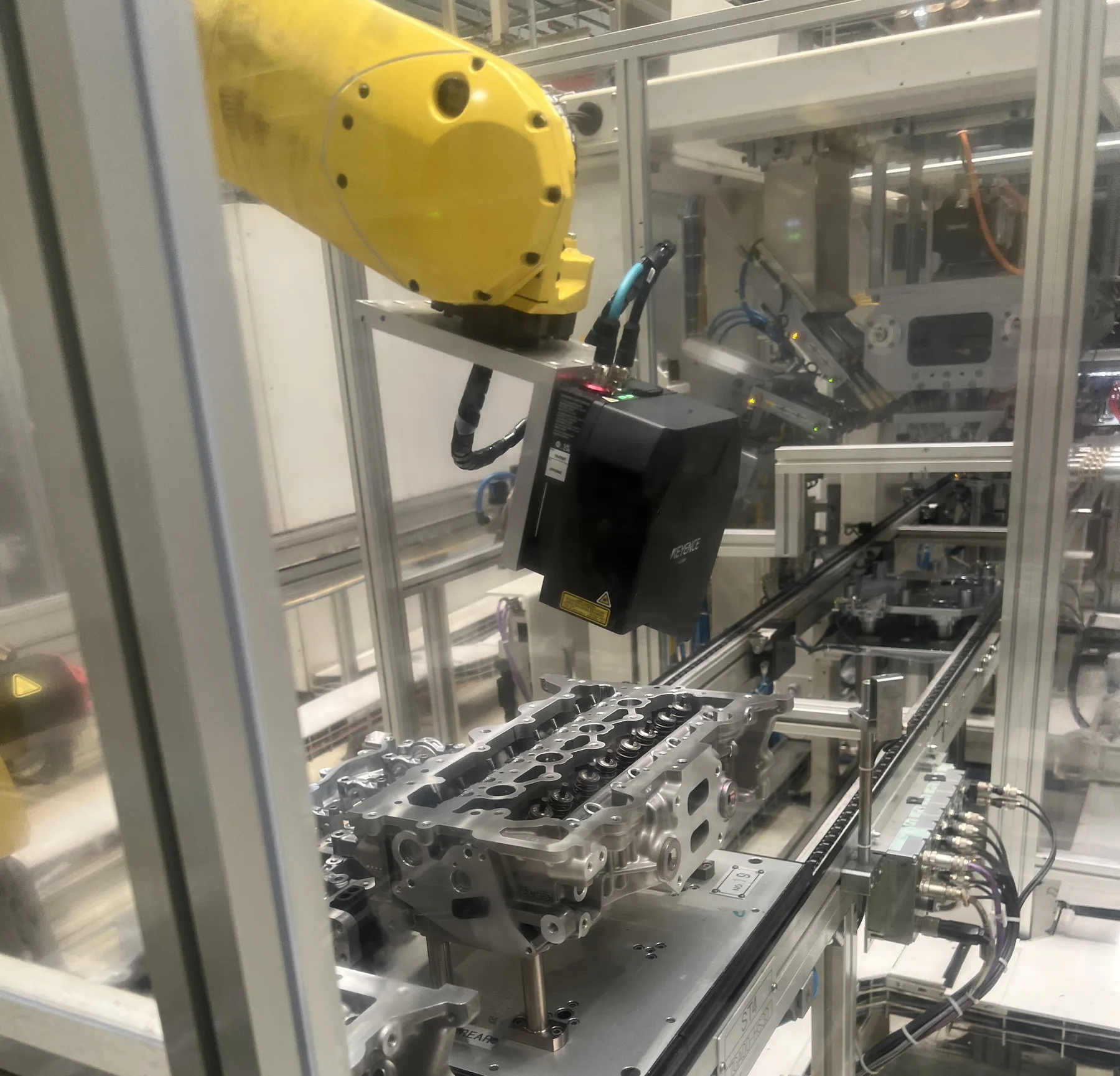
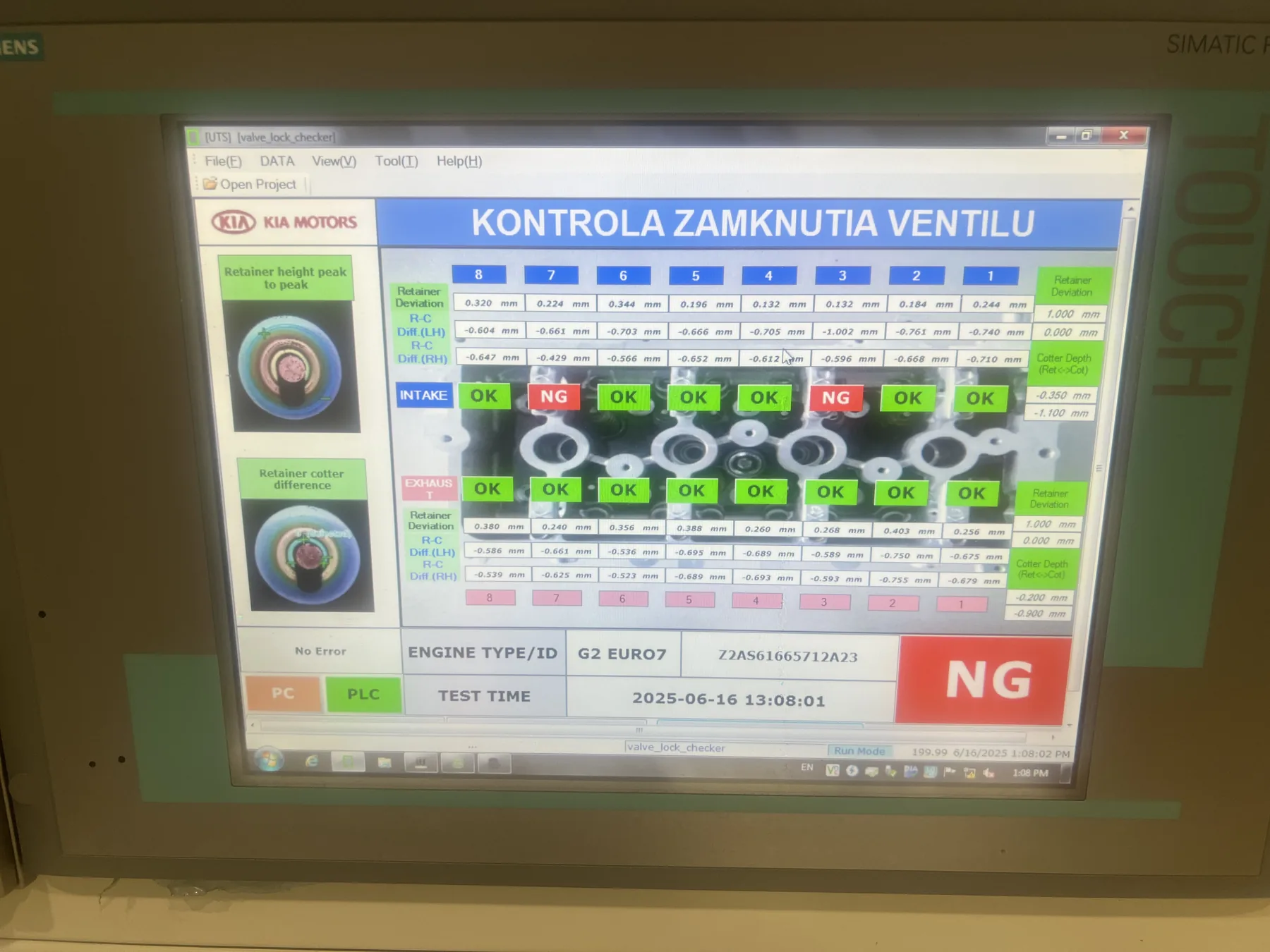
I set up a vision system for quality control in engine assembly: a 3D scan of each engine block, checked automatically.
- Installed a Keyence camera system to verify valve-spring alignment.
- Programmed the PLC logic that ties the vision system into the line.
- Developed the 3D-scan algorithm that flags misaligned springs.
- Built the inspection step that stops a defective block before assembly continues.
Press shop
I installed safety systems for die-changing operations while learning the stamping process from raw coil to formed panel.
- Installed a Keyence safety sensor system for the automated die-change machinery.
- Designed the safety protocol that keeps personnel out of the danger zone during die swaps.
- Dies are multi-tonne steel blocks, so handling procedures matter as much as the sensors.
Body shop
The body shop has the most robots in the plant. I helped keep it running and did most of my PLC programming here.
- Maintained over 300 autonomous welding robots.
- Learned PLC programming for robot control on a large line.
- Troubleshot robot conflicts during the new model launch, where weld positions were millimetres off specification.
Body shop welding robots during troubleshooting.
Paint shop
I observed the full paint process: pre-treatment baths, coating application and sealing.
- Chassis immersion in more than ten treatment liquids for corrosion protection.
- Robotic sealer application at critical joints and seams.
- Paint quality control and environmental compliance systems.
Tools
- Hyundai robot programming: motion planning and gripper control.
- PLC programming for automated cells and machine control.
- Keyence vision: cameras, 3D scanning and automated inspection.
- Keyence safety sensors and zone monitoring.
- Festo pneumatic grippers and bi-directional conveyor programming.
- CAD cell layout and mechanical design.
Results
- Removed three manual handling positions from the wheel line.
- Designed the cell so production continues through a single conveyor or robot failure.
- Added a vision check for valve-spring alignment in engine assembly.
- Installed safety sensing for die changes in the press shop.
- Supported a new model launch in the assembly and body shops.
What I learned
Thousands of components, hundreds of robots and dozens of processes have to line up to build a car. The internship taught me how much redundancy matters in automation, how large PLC systems are structured, and how quality control and legal compliance drive manufacturing decisions.
Seeing every department also showed how each stage constrains the next: press-shop tolerances affect body-shop welding, and paint-shop requirements shape assembly procedures.
Note on disclosure
Some details, specifications and documentation are covered by an NDA and are left out here.